What Makes a Genuine WWII Wool Blanket
WWII military textile collecting has gotten complicated with all the reproductions and misidentified surplus flying around. As someone who has spent the better part of a decade haunting estate sales and flea markets for genuine military wool, I learned everything there is to know about spotting real WWII US Army blankets from the fakes. Today, I will share it all with you.
These blankets are everywhere — estate sales, eBay lots, antique malls in rural Ohio — but most people genuinely cannot tell a 1943 contract issue from a Korean War remake or a modern reproduction that’s been dragged through dirt to look aged. I couldn’t either, at first.
The standard WWII issue came in olive drab, officially designated OD-7. Not a uniform shade, though. Dye batches varied by contractor, and eighty years of storage adds another layer of color variation that makes matching difficult. Real WWII blankets required 80 to 100 percent wool content by specification — some contracts dipped toward the lower end when materials got tight.
Two patterns dominated the issue runs: the M-1934 and the M-1942. Both measured roughly 66 by 84 inches, though minor dimension differences existed between contractors. The M-1934 had a slightly different weave pattern than the M-1942. Honestly, though, the contract stamp tells the real story. That’s where authentication actually lives.
But what is a contract stamp? In essence, it’s the manufacturer’s fingerprint pressed into the corner of every government-issued blanket. But it’s much more than that — it’s a full record of who made it, when, and under what specifications. A genuine unissued example with a sharp stamp and original packaging can fetch $300 to $800. A well-used blanket with a faded mark might move for $75 to $150. Reproductions deliberately aged to fool buyers? They’re worth whatever a beginner will pay — usually $30 to $60 — and they tank the value of any mixed lot they travel in.
How to Read the Contract Stamp
Probably should have opened with this section, honestly. The stamp is your authentication fingerprint, and learning to read it is what separates collectors from people who overpaid at an antique mall.
So, without further ado, let’s dive in.
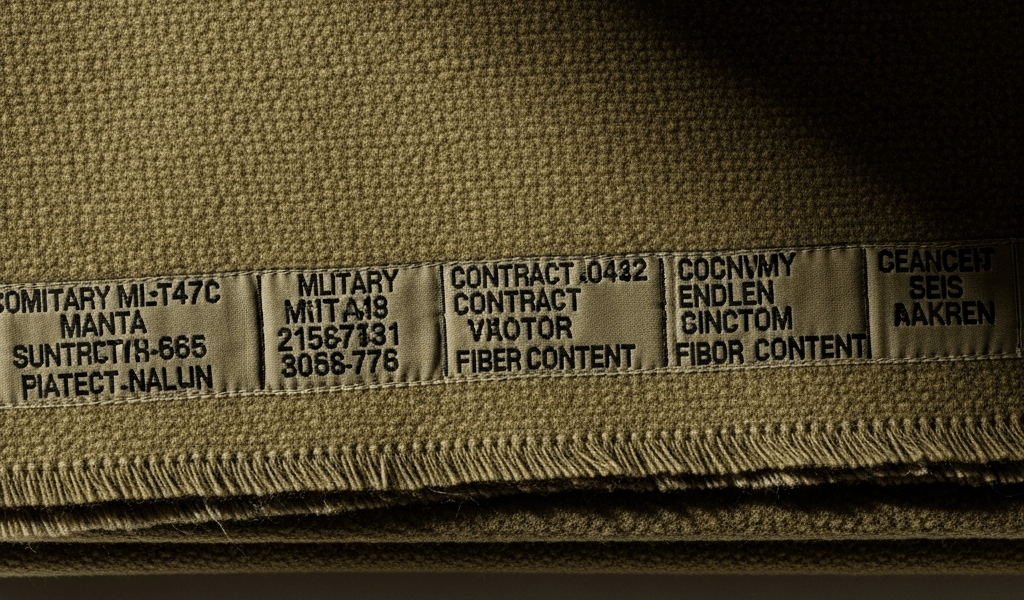
The stamp layout follows a consistent format. Contractor name or abbreviation, contract number, year of manufacture, and fiber content percentage — all printed or woven into one corner, usually lower right. Contract numbers typically read something like W-398-QM-1943, where QM stood for Quartermaster Corps. That W-prefix is the first thing you check.
Known contractors include Chatham Manufacturing, Pacific Mills, Pendleton Woolen Mills, and Faribo Woolen Mills. Each had distinct printing styles. Chatham blankets read “CHATHAM MFG. CO.” — printed clearly, no ambiguity. Pacific Mills used “PAC. MILLS” or similar shorthand. Knowing these names matters because someone forging a reproduction needs to match period-correct fonts, ink colors, and stamp positioning. Harder than it sounds, and most don’t bother getting it right.
The contract number format is critical. WWII contracts used the W-prefix system throughout. A stamp reading W-398-QM-1944 tells you the contract number, the issuing department, and the year. Post-war blankets shifted to different numbering entirely. Korean War-era blankets used slightly different prefixes — close enough to confuse a quick glance, different enough to catch if you know what you’re looking for. See a contract number that doesn’t match WWII parameters, you’re probably holding post-war surplus.
Fiber content appeared as direct percentages: “100% WOOL,” “90% WOOL 10% COTTON,” variations like that. Higher wool percentages generally indicate earlier war contracts. Later years sometimes show lower percentages as raw materials got scarcer across the supply chain.
What happens when the stamp is missing or fully faded? Value drops hard. A completely unmarked blanket — even one where everything else screams authentic — becomes difficult to price above $50 unless it carries provenance. Unit markings or a veteran’s name stenciled on helps. Faded stamps are a different situation entirely. Genuine fading from eight decades in basement storage looks distinct from artificial aging. Real fading concentrates in high-wear areas, runs uneven. Artificially faded stamps tend to look evenly washed out — which should raise your suspicion immediately. Don’t make my mistake of skipping this check on a $200 purchase.
Physical Characteristics That Confirm Age
Frustrated by a $175 loss on a quality 1970s reproduction with an excellent-looking stamp, I started verifying everything else too. That was 2019. Haven’t been fooled since.
Weave density separates genuine articles from fakes faster than almost anything else. Run your fingers across the blanket in both directions. WWII blankets had consistent, tight weaves — the wool fibers feel uniform in texture, dense, with almost no give. Modern reproductions often use looser weaves to cut manufacturing costs. Feel a significant difference in density between warp and weft directions and you’re likely handling something made well after 1960.
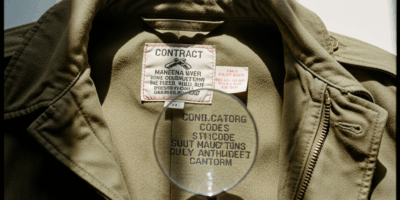
The selvage edge — the bound side of the fabric — tells its own story. Genuine WWII blankets used cotton binding tape or wool binding, stitched with a specific chain-stitch pattern that sits flat against the fabric. Post-war blankets sometimes used different binding materials or looser stitching that puckers slightly at the corners. Inspect the edge under good light. A 10x loupe — the kind watchmakers use, available for about $8 on Amazon — helps enormously here.
OD-7 dye faded unevenly over decades, typically lightening and sometimes shifting toward a greenish-tan tone that’s nearly impossible to replicate artificially. Reproductions made to look vintage often use uniform fading or tones that run too brown — they don’t match documented authentic examples. I’m apparently obsessive about color matching and keeping reference photos on my phone works for me while eyeballing alone never does.
Storage creases matter too. Original packing creases on genuine examples have a specific permanent wave — the kind that sets into wool over decades and doesn’t release easily. Mildew staining from basement storage, small holes from insect damage, color variations from uneven aging — these all signal authenticity. Artificially aged blankets look too uniformly distressed, like someone applied wear systematically rather than letting eighty years do it randomly.
Post-War and Foreign Copies to Watch Out For
Korean War-era blankets look nearly identical to WWII examples at a glance. That’s what makes them the most dangerous mislabeled item in this category. The contract number format differs slightly — check for post-1945 dates or non-W prefixes. Cold War US military blankets sometimes reused similar designs but with updated specs visible in the markings if you look closely.
NATO blankets and foreign military issues get mislabeled as WWII constantly. British military blankets from the same period use different fiber content markings and metric measurements. Canadian military blankets have bilingual stamps — easy tell once you know it. German, Italian, and Soviet blankets show up occasionally and should be assessed completely separately. That’s its own rabbit hole.
Use this quick checklist in the field: Contract number starts with W and includes QM? Check. Year reads 1941-1945? Check. Contractor name matches known manufacturers? Check. Fiber content shows wool percentage? Check. Weave feels tight and uniform? Check. Fading looks natural and uneven? Check. That’s what makes this process endearing to us collectors — it’s methodical enough to trust, tactile enough to feel satisfying when it clicks.
What WWII Wool Blankets Are Worth Today
Pricing depends on condition more than anything else — more than provenance, more than which contractor made it.
Unissued blanket with sharp creases, clear stamp, original packaging: $500 to $800. Good condition with visible wear but readable stamp: $200 to $400. Heavy use with faded stamp: $75 to $150. Heavily damaged: $25 to $60. Those ranges hold pretty consistently across serious venues.
Named-unit provenance pushes value up fast. A blanket marked with a specific regiment or division commands a premium. A blanket with a soldier’s name stenciled on it — say, “PVT. KOWALSKI / Co. B / 82nd” — can sell for $600 or more if documentation exists to back it up. Original packaging or shipping labels add roughly 20 to 40 percent to the final price.
These sell best at dedicated militaria shows, at specialized auction houses like Rock Island Auction or Cowan’s Auctions, and occasionally on eBay among the serious collector crowd. Local antique malls underprice them regularly. First, you should build relationships with dealers who specialize in militaria — at least if you plan to buy and sell consistently rather than just collect. Rock Island might be the best option for selling high-value pieces, as serious militaria requires serious buyers. That is because the general auction market rarely produces the prices that specialized venues do for this category.
While you won’t need a laboratory to authenticate these blankets, you will need a handful of reliable tools — a 10x loupe, a reference binder of documented contract stamps, and ideally one confirmed authentic example to compare against. Everything else follows from there.

Stay in the loop
Get the latest military memorabilia market updates delivered to your inbox.