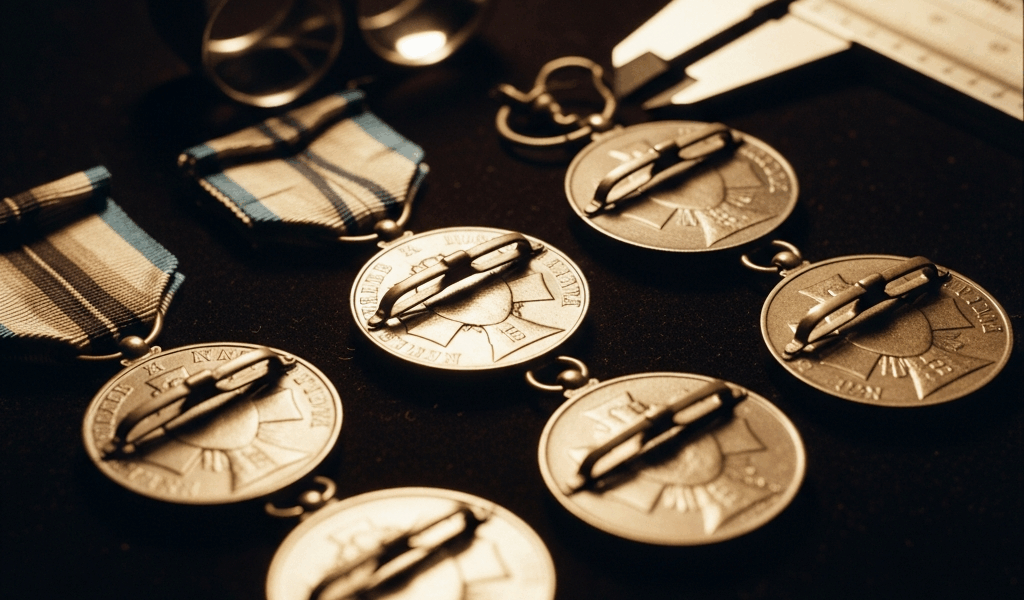
German WWII Medals Have Gotten Complicated With All the Fakes Flying Around
As someone who spent years chasing German militaria and getting burned more than once, I learned everything there is to know about spotting reproduction medals. Today, I will share it all with you.
The Iron Cross 1st and 2nd Class, EK ribbon bars, the Close Combat Clasp, the Eastern Front Medal — these top the hit list. A single first-class Iron Cross moves for $2,000 to $8,000 depending on provenance. That price point makes reproduction worthwhile for manufacturers willing to cut every corner imaginable. More fakes circulate right now than most collectors want to admit out loud. The market knows it. Dealers know it. And yet buyers keep getting burned daily.
Post-war reproduction started almost immediately. Manufacturers like B&NL in Germany and modern Czech operations produce copies that fool rushed buyers every single day. The barrier to entry is embarrassingly low — basic metalworking equipment, access to reference images, and the knowledge that most online buyers will never physically inspect a piece before bidding. A collector in North America bids on something they won’t hold until it arrives at their door three weeks later. By then, the seller’s already gone.
What Authentic Medals Actually Feel and Look Like
Probably should have opened with this section, honestly. I bought a “stunning” Close Combat Clasp for $180 in 2015 that felt wrong the moment my fingers touched it. Too light. Too smooth. The lessons that followed cost me more than that initial $180 — but they were worth every painful dollar.
But what is an authentic material signature? In essence, it’s the combination of weight, texture, and finish that wartime manufacturing left behind. But it’s much more than that.
Most struck pieces used zinc alloy, iron, or tombak — a copper-zinc composition that feels noticeably warmer than zinc alone. Weight matters immediately. A genuine Iron Cross 2nd Class lands between 11 and 13 grams. Pick it up. It has density. Reproduction zinc pieces often run 20 percent lighter because manufacturers shave metal to cut casting costs. You can feel the difference before you even reach for a scale.
The finish tells everything — at least if you know what you’re looking at. Wartime medals show a specific patina that isn’t pristine, isn’t artificially dulled, but evenly oxidized with texture variation that follows the high and low points of the original strike. Real patina sits in the crevices. It doesn’t coat uniformly like spray paint does. Reproductions receive chemical aging or artificial patination that looks suspiciously even under a loupe. Wartime manufacturing meant imperfect finishes — stamping marks, tiny casting remnants, minor surface irregularities. Those aren’t flaws. Those are fingerprints of the era.
Hardware reveals truth or lies in seconds. The pin needle on authentic medals runs between 0.6mm and 0.8mm in diameter, attached to a catch that either solders directly to the reverse — common pre-1943 — or connects via a small ring, which became standard post-1943. If the pin shines like new and the catch shows age, someone replaced one component. Authentic hinges on mounted bars solder with soft solder, leaving visible seams and slight solder bloom. Reproduction hinges often feature modern spot welding or screw assembly. Spot welds look smooth and precise. Wartime soldering looks handmade. That distinction matters enormously.
Six Physical Tests That Reveal a Fake Medal
1. The Magnet Test
Ferrous content separates authentic from reproduction fast. Iron Crosses and most German awards contain enough ferrous material to respond to a strong magnet — not jumping dramatically to the metal, but showing definite, measurable attraction. Bring a neodymium magnet near the piece at a 45-degree angle. Authentic pieces show subtle pull. Reproductions made from pure zinc or poor alloy mixtures either show no response at all or respond too aggressively. Heavy attraction indicates incorrect composition. Both extremes are red flags worth noting.
2. Edge Seam Inspection
Struck medals come in two halves soldered together. Run your fingernail or a plastic edge — not metal, don’t scratch anything — around the perimeter. An authentic seam shows evidence of hand assembly: slight inconsistency, visible solder bloom, occasionally a tiny gap where the halves don’t align perfectly. Modern reproductions often feature seamless edges from injection molding or perfectly symmetrical solder lines. Some newer Czech reproductions actually solder correctly, so this test alone doesn’t close the case. It’s one piece of a larger combination.
3. Ribbon Weave and Fade Pattern
Ribbon analysis catches careless reproduction sellers every time. Iron Cross 2nd Class ribbons ran 24mm wide with a specific black-white-black silk weave. Count the individual threads in the white center stripe under magnification — authentic ribbons show 8 to 10 threads, achieved through period looms. Modern reproductions use synthetic ribbon, usually polyester instead of silk, with incorrect thread counts or dye that fades uniformly across the entire surface. Real ribbon fades unevenly. Edges fade faster than protected center sections. That’s just how silk ages over eight decades of light and air exposure. Modern reproductions show no wear pattern or suspiciously identical age throughout. Don’t make my mistake of skipping ribbon inspection because the medal body looks right.
4. Maker Mark Placement and Font
The reverse tells origin stories through maker marks. Authentic 1st Class Iron Crosses from Godet & Sohn feature a specific font and placement depth — the mark presses into the metal with consistent pressure across verified examples. Reproduction marks often appear shallow, using modern font rendering or slightly wrong proportions. Angolia’s Iron Cross book shows high-resolution reverse images worth studying closely. Maker marks should appear in the identical location across multiple verified pieces. If yours shows a mark that’s slightly off-position or unusually placed, document it and cross-reference at least three independent sources before deciding anything.
5. Pin and Catch Hardware Finish Consistency
Hardware finish should match the medal body or show predictable patination. A medal with aged bronze finish and a shiny stainless steel pin replacement signals tampering immediately. That said — all components showing perfectly identical age is equally suspicious. Someone who handled and cleaned the medal would create friction on the pin, giving it different wear than protected surfaces. Examine pin needle straightness too. Wartime pins occasionally bent slightly during manufacture or handling. I’m apparently someone who notices these tiny bends, and checking for them has saved me twice. Perfect straightness across multiple examples from the same seller suggests modern production control. The catch clasp should feature consistent solder joints without signs of replacement work — replacement soldering shows darker color and different surface texture.
6. Weight Comparison Against Reference Pieces
Use a precision scale accurate to 0.1 gram — jewelry scales from Amazon run about $12 and work fine for this. Weigh your medal and compare against published specifications from Angolia or Littlejohn references. An Iron Cross 2nd Class should land between 11 and 13 grams. Eastern Front Medal should weigh approximately 7 grams. A single off-weight piece might indicate casting variation, which did occur authentically. Multiple pieces from the same seller consistently running light is a different story entirely. That’s intentional lightening. Walk away from that seller permanently.
Red Flags When Buying Online or at Auction
Photos hide what hands reveal. I’ve watched experienced collectors — people with thirty years in the hobby — get burned by online purchases because auction photography obscures critical details. Blurry or angled hinge shots specifically prevent magnification of solder quality. Over-polished surfaces in listing photos suggest cleaning that masks material inconsistencies. Red flag combination: pristine medal surface in photos paired with yellowed ribbon photographed beside the piece rather than attached to it. That suggests composite images or components combined from completely different sources.
Provenance documentation matters — at least if you’re spending serious money. Realistic wartime documentation shows period aging: foxing, document yellowing, period-correct typewriter fonts or handwriting. Fabricated documentation often appears too clean, printed on modern white paper, or carries anachronistic details like ballpoint pen signatures from 1943 when only fountain pens existed. Established auction houses like Hermann Historica conduct authentication before listing. Their catalog notes flag known reproductions and questionable pieces. That’s worth the auction premium, honestly.
Suspiciously clean patina without handling wear should raise immediate flags. Prices significantly below market rate should raise them higher. One authentic Eastern Front Medal is a genuine find. Five identical examples from the same seller is a reproduction batch. That’s what makes pattern recognition so endearing to us collectors — once you see it, you can’t unsee it.
When to Walk Away and When to Get a Second Opinion
Not every uncertain piece is a fake. Manufacturing variation occurred throughout the war. Some authentic medals show characteristics that initially seem wrong until cross-referenced against multiple verified examples. But certain combinations of red flags are dealbreakers. Incorrect weight plus non-ferrous response plus modern solder joints plus synthetic ribbon. That’s fake. Full stop. No amount of compelling provenance paperwork changes that combination.
Trusted authentication resources exist — and using them costs far less than buying wrong. Established militaria forums like Wehrmacht Awards include collectors with decades of hands-on experience who will look at your photos and tell you what they think. Reference books by Angolia and Littlejohn remain the standard. Vetted dealers specializing in German medals will authenticate items for $25 to $75 depending on complexity. That fee is nothing compared to $800 spent on a Czech reproduction Close Combat Clasp. So, without further ado — use those resources before committing funds, not after the package arrives.
This new idea of combining multiple physical tests rather than relying on a single method took off several years ago and eventually evolved into the standard authentication approach enthusiasts know and trust today. Knowledge remains the only real defense against reproduction networks that improve their craft every single year. The fakes from 2024 are better than the fakes from 2010. Your detection skills need to keep pace.



Stay in the loop
Get the latest military memorabilia market updates delivered to your inbox.