Sherman Tank for Sale
Sherman Tank for Sale
Finding a Sherman tank for sale has gotten complicated with all the brokers, auction houses, and online listings competing for your attention. As someone who’s been around the military vehicle collecting scene for a while, I learned everything there is to know about what it takes to actually buy one of these iconic WWII machines — and trust me, it’s quite the journey.
Understanding the Sherman Tank
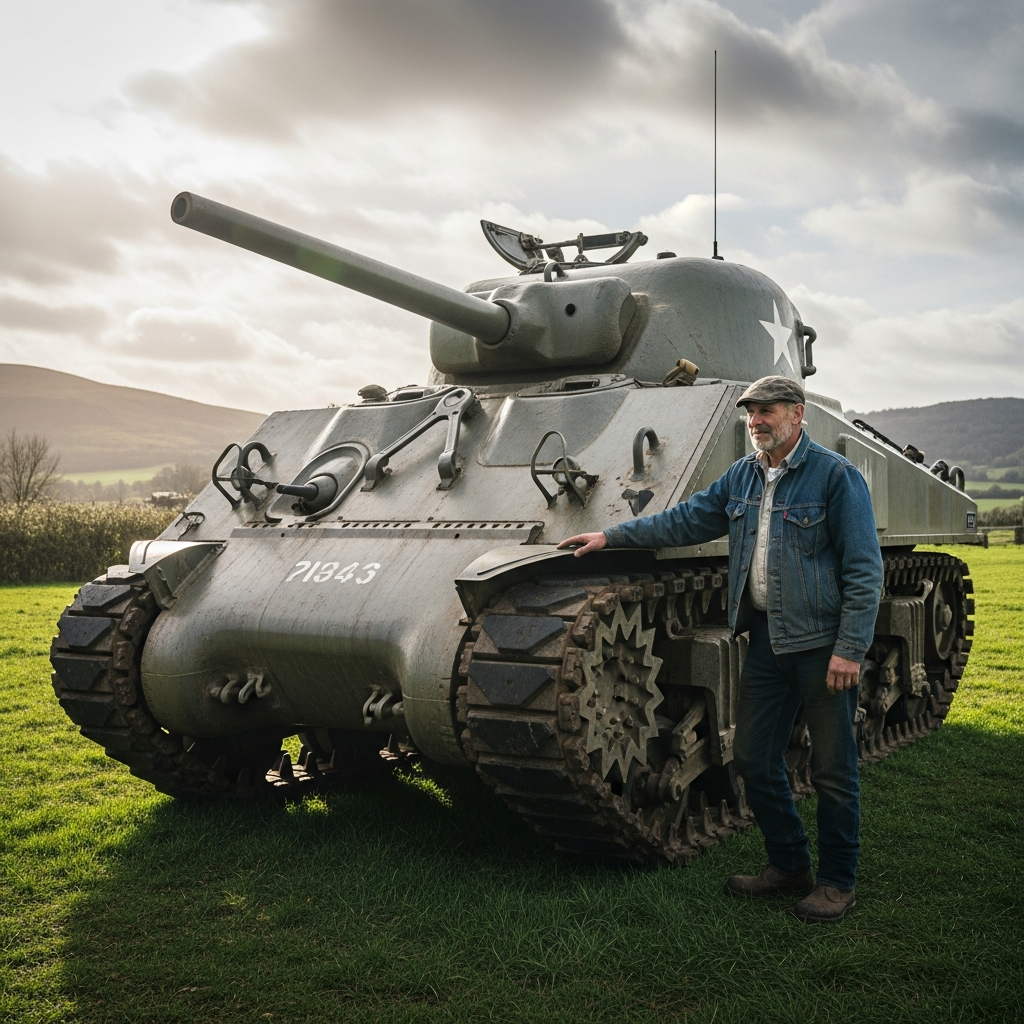
The M4 Sherman was the backbone of the American armored force during World War II, named after Union General William T. Sherman. What made the Sherman special wasn’t that it was the best tank on the battlefield — it often wasn’t — but that it could be mass-produced at an incredible scale. About 50,000 of them rolled off assembly lines during the war, which is a staggering number when you think about it.
Each Sherman weighed around 30 tons and needed a crew of five to operate. The standard armament was a 75mm gun, though some variants got upgraded to a 76mm for better anti-armor capability. The armor thickness ranged from 12 to 75mm, which wasn’t the thickest out there, but the Sherman made up for it with reliability and versatility. I’ve talked to restoration specialists who say these tanks were designed to be fixed in the field by average mechanics — and that practical engineering philosophy is a big part of why so many have survived to this day.
Variants of the Sherman Tank
- M4A1: Featured a cast hull and a Continental R975 engine. Probably the most recognizable variant with its rounded hull shape.
- M4A2: Diesel engine model that saw service with the U.S. Marines and was supplied to Soviet forces through Lend-Lease.
- M4A3: Powered by the Ford GAA V8 engine with a welded hull — this became the favored post-war model for many armies.
- M4A4: Had a longer hull to accommodate the Chrysler A57 multibank engine. Mainly used by British forces who renamed it.
- Firefly: The British adaptation that mounted the powerful 17-pounder anti-tank gun. These could actually go toe-to-toe with German heavy armor.
Why Buy a Sherman Tank?
That’s what makes Shermans endearing to us military vehicle enthusiasts — they represent an achievable piece of WWII history. Some buyers are driven purely by historical passion. There’s something profound about owning a machine that might have rolled across Normandy or fought in the Battle of the Bulge.
Museums and collectors work to preserve these tanks and restore them to running condition so the public can see and hear what they were like in their prime. They also get used in film productions and reenactments, bringing an authenticity that CGI just can’t match.
Surprisingly, many Shermans can still be made operational. Mechanics who specialize in vintage military vehicles have gotten incredibly good at keeping these old warriors running. I’ve seen restored Shermans at tank driving events that purr like they just came off the production line.
Finding a Sherman Tank for Sale
Probably should have led with this section, honestly. Finding a Sherman requires patience and some serious networking. You won’t find these on your local Craigslist (well, almost never). Specialized dealers and military vehicle auctions are your primary options. Online platforms like Milweb occasionally list them, and specialty auction houses sometimes feature armored vehicles.
Your best bet is getting connected with the military vehicle collector community. Clubs, associations, and online forums are where deals happen. Members share leads, offer advice on what to look for, and sometimes have vehicles they’re willing to sell to the right buyer.
Military Vehicle Dealers
A few dealers specialize in this market:
- The Tank Museum: Based in the UK, they sometimes have tanks and parts available for sale.
- Armor and Military Museum: U.S.-based operation known for quality restorations and sales of armored vehicles.
- Morlock Motors: A German dealer with an impressive inventory of historic military vehicles.
Online Auctions
eBay does occasionally list military vehicles, though you’ll want to do serious due diligence before committing. Specialty sites like IronPlanet and GovPlanet are better bets — they focus on heavy equipment and occasionally feature decommissioned military hardware. Government surplus auctions from old military installations can sometimes include tanks too.
Purchasing Considerations
Before you hand over any money, you need to understand what you’re actually buying. The condition of the tank is everything, and it breaks down into three categories.
Condition and Restoration
Fully Restored: These are the showpieces — operational, often in excellent cosmetic condition, and ready to drive. They’re also the most expensive by a wide margin.
Partially Restored: Needs some work to become fully operational. These are more affordable but expect to invest significant time and money to get them where you want.
Non-Restored: Essentially a project vehicle. Could be the cheapest upfront, but restoration costs can be jaw-dropping. I’ve heard stories of people spending more on restoration than on the initial purchase.
Legal and Logistics
Transporting a 30-ton vehicle isn’t exactly calling an Uber. You’ll need special permits, flatbed trailers rated for the weight, and possibly escort vehicles depending on your route. Check local laws thoroughly — some jurisdictions require demilitarization (removing or permanently disabling weapons systems). Insurance is another puzzle piece; you’ll likely need a specialized provider who understands vintage military vehicles. Don’t skip any of these steps.
Costs Involved
Let me be straight with you: this isn’t a cheap hobby. Fully restored Shermans can go for $500,000 or more. Partially restored examples usually land somewhere between $200,000 and $300,000. Non-restored tanks might start around $100,000, but remember that restoration can easily add another $100,000 or more on top.
And that’s just the purchase and restoration. Factor in transportation, permits, insurance, ongoing maintenance, and proper storage (these things need protection from the elements), and you’re looking at a serious financial commitment.
Restoration Process
Restoring a Sherman tank is not a weekend project. It demands specialized expertise, rare parts, and a lot of patience. Most restorations take years to complete, but the people who do it say it’s one of the most rewarding experiences of their lives.
The process typically starts with a thorough assessment: structural integrity, mechanical condition, electrical systems. The hull usually needs rust treatment and possibly metalwork. Engine and transmission rebuilds follow. Electrical systems and turret mechanisms come last. Each step requires knowledge that most regular mechanics don’t have.
Sourcing Parts
Finding parts is often the biggest headache in a Sherman restoration. Some components are incredibly scarce, and you may need to have certain pieces custom fabricated. Networking with other collectors is essential — someone usually knows someone who has what you need. Auction sites and specialized military vehicle parts suppliers can also help fill the gaps.
Working with Experts
Don’t try to do it all yourself unless you genuinely have the expertise. Working with experienced military vehicle restoration specialists ensures quality work and helps maintain the tank’s historical authenticity. Their knowledge of period-correct details and their experience solving unusual mechanical problems is invaluable.
Where to See Sherman Tanks
Before committing to a purchase, go see some in person. The Tank Museum in Bovington, UK, has an incredible collection. The American Heritage Museum in Massachusetts features several models you can get close to. Military vehicle shows and reenactment events are also great opportunities to see restored Shermans in action and talk with their owners about what ownership is really like.
Owning a Sherman Tank
Owning a Sherman is a blend of passion for history and appreciation for mid-century engineering. The journey from finding one to getting it restored and running is long and complex, but for the right person, it’s incredibly fulfilling. You’re not just buying a vehicle — you’re becoming the steward of a piece of history that helped shape the modern world.
Final Thoughts
Sherman tanks are more than machines. They’re symbols of a generation’s sacrifice and industrial determination. Owning one requires dedication, resources, and deep respect for what these vehicles represent. If you’ve got the passion and the means, there’s nothing quite like being the person who keeps one of these legends alive.

Stay in the loop
Get the latest military memorabilia market updates delivered to your inbox.