WWII Zippo Lighters — How to Tell Real from Reproduction
WWII Zippo authentication has gotten complicated with all the reproductions and fantasy pieces flying around. As someone who’s spent fifteen years handling wartime lighters, I learned everything there is to know about spotting the fakes — usually the hard way, standing at a flea market table with a seller watching me and real money on the line. I’ve gone through north of sixty wartime Zippos. Bought some I shouldn’t have. Passed on some I wish I hadn’t. The process that took me months to figure out, I’m laying out here in plain language.
What Makes a WWII Zippo Different from Modern Ones
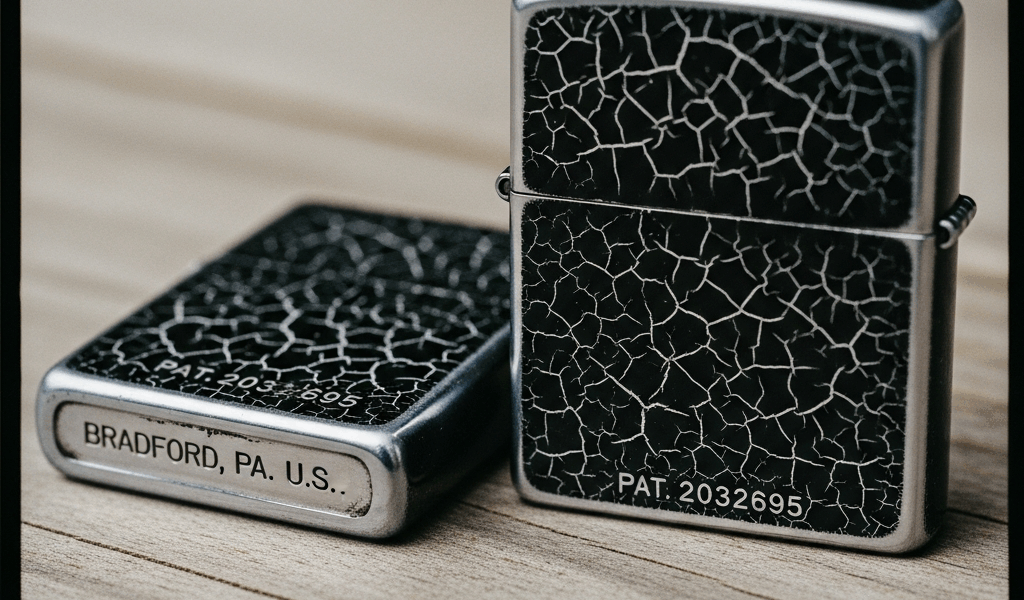
The wartime production window runs 1942 through 1945. Zippo stopped making brass lighters in 1942 — the military needed the metal — and that single materials decision is basically the whole ballgame for authentication purposes. Everything from those four years used steel cases. Low-grade, relatively soft steel with black crackle paint over the top.
But what is that finish, exactly? In essence, it’s a matte textured coating applied over bare steel. But it’s much more than that — it reduced glare for soldiers in the field and gave them something to grip in wet conditions. It’s also the single most imitated detail on reproduction pieces, and most reproductions get it wrong.
Case geometry changed too. Wartime Zippos have noticeably rounded corners — hold one next to a current regular edition and the silhouette difference is immediate. The base is flat and simple, no crimped bottom edge. And the date code system matters here. Starting in 1955, Zippo began stamping date codes on the bottom, but wartime bottoms read simply “ZIPPO MFG. CO. BRADFORD, PA.” — nothing else. If you see a modern letter/slash/dot date code on something being sold as a wartime piece, put it down and walk.
The insert — the inner mechanism holding the flint wheel, wick, and fuel — went steel during wartime too, replacing the brass that came before and returned after. Some wartime variants have a taller chimney. The flint wheel runs coarser and rougher than postwar production. That’s what makes these details endearing to us collectors — there’s nothing subtle about the differences once you know what you’re touching.
The Five Authentication Checks
Probably should have opened with this section, honestly. This is the part you actually use when a lighter is in your hands.
Check One — The Bottom Stamp
Flip it over. Authentic wartime Zippos show simple stamped text — no date code system, slight irregularity in the lettering consistent with steel stamping of the era. Not crisp. Not laser-clean. Reproductions are often too uniform, too deep, or formatted wrong. The font itself is a tell: Zippo used a specific block lettering style during wartime that differs subtly from their 1950s and later stamps. Get familiar with it before you spend real money.
Check Two — The Hinge
Count the barrels on the hinge — the small cylindrical sections connecting the lid to the case body. Wartime Zippos use a five-barrel hinge. Modern Zippos since 1986 use four. Someone selling you a “WWII Zippo” with a four-barrel hinge is selling you something made after 1986 at the absolute earliest. Full stop. The five-barrel version also sits slightly more proud of the case back — a small detail, but consistent across genuine wartime pieces.
Check Three — Steel vs Brass Test
Don’t make my mistake. In 2011 I paid $85 for what turned out to be a heavily weathered postwar brass lighter someone had painted with black enamel. The magnet test would have taken four seconds and saved me the grief. Bring a small rare earth magnet — a $4 neodymium magnet from any hardware store. Brass is non-magnetic. Steel is magnetic. A genuine wartime Zippo case and insert will both pull the magnet. If the case doesn’t attract, it’s brass construction and not a wartime piece, regardless of how convincing the patina looks.
Check Four — Case Construction and Seams
Run your fingernail along the side seams. Wartime production shows hand-fitted construction characteristics — minor irregularities, slightly uneven solder, evidence of individual assembly. There’s often a faint ridge you can feel. Reproduction seams tend toward machine-perfect uniformity with no variation. Check the inside too — the felt pad underneath the insert and the liner card slot show different oxidation patterns on originals versus fakes. Genuine wartime pieces that saw use have interior oxidation that’s genuinely difficult to convincingly replicate.
Check Five — Insert Markings
Pull the insert out. Wartime inserts should have “ZIPPO” stamped on the insert body itself. Chimney height on a 1943–1945 insert runs approximately 19mm. The flint spring is heavier gauge than postwar examples. The cam — the small lever inside the lid that creates the snap when you close it — should show slight surface irregularity consistent with steel stampings of that era. Reproductions frequently mix postwar inserts into wartime cases, or the reverse. Mismatched components are a red flag even when one piece is legitimate.
Common Reproductions and How to Spot Them
Not every non-original WWII Zippo is a fraud. The distinction matters — financially and ethically.
The Zippo 1941 Replica Line
Zippo themselves sells an officially licensed replica — the 1941 Replica, retailing around $40–$60. Legitimate collectible. Zippo is transparent about what it is, and the packaging says so clearly. The problem: an unscrupulous seller can strip the packaging and present one as an original. The 1941 Replica uses a five-barrel hinge and steel construction, so it passes the magnet test and the hinge test. Where it fails — the bottom stamp includes modern date codes, interior construction tolerances are tighter than wartime production, and the black crackle finish is too uniform. Run all five checks regardless of whether the box is present.
Fantasy Unit Marking Pieces
Engraved unit Zippos carry serious premiums when authentic — a lighter marked with 101st Airborne insignia or a specific ship name can run $400 to over $1,500 depending on documentation. Frustrated by how often buyers get burned here, I started building a reference photo library specifically for engraving details. The fantasy piece market is large and organized. These are lighters — sometimes genuine wartime cases, sometimes 1941 Replicas — with engraving added recently using rotary or laser tools. Laser engraving on steel has a characteristic clean-cut appearance with no burring around the lines. Hand engraving from the 1940s shows depth variation and tool drag marks visible under a loupe. Budget for a 10x jeweler’s loupe if you’re buying unit-marked pieces. That’s not optional.
Vietnamese War Tourist Zippos
These get confused with WWII pieces more than you’d think. During the Vietnam era, a cottage industry produced engraved Zippos sold to American servicemen — many of which are now legitimate collectibles in their own right. They’re not WWII pieces. The base lighters are brass construction from the 1960s and early 1970s. The magnet test separates them immediately. Worth real money on their own terms. Not worth WWII money.
Red Flags at a Glance
- Seller can’t say when or where they acquired the piece
- Black crackle finish is perfectly even — no chips, no wear variation, no thin spots
- Bottom stamp shows modern date code formatting
- Four-barrel hinge
- Case doesn’t attract a magnet
- Insert markings don’t match the supposed production year
- Price dramatically below market — under $75 for a “wartime Zippo” at an antique show is a warning, not a deal
What WWII Zippos Are Worth in 2026
Plain black crackle wartime Zippos in good used condition — no engraving, no provenance documentation, just a verified authentic wartime lighter — sell consistently in the $150 to $350 range through established platforms. Heritage Auctions and Rock Island Auction both handle these regularly. Condition drives that spread hard: a lighter with 80% original black crackle still intact sits at the top; one worn to bare steel with surface rust sits at the bottom or below it.
Engraved unit Zippos without documented provenance — clearly unit-marked but no paper trail connecting it to a specific soldier — typically sell $300 to $700 depending on the unit’s profile. The 82nd Airborne, 1st Marine Division, and major Pacific engagement ship names command premiums over lesser-known units. Apparently the collector market has very specific opinions about which units move the needle. It does.
Named Zippos with documented provenance are where values get genuinely serious. A lighter with a soldier’s name engraved, accompanied by discharge papers, photographs, or family documentation confirming the connection — one entered a specialist military memorabilia auction in late 2024 and realized $2,100. A plain wartime lighter with a family letter confirming it belonged to a Medal of Honor recipient sold for considerably more. The lighter is the artifact; the documentation is the story. Both together are worth multiples of either alone.
This new idea of building reference libraries took off among serious collectors several years ago and eventually evolved into the photo-documentation practice enthusiasts know and rely on today — photographing every authentication detail on every legitimate wartime Zippo examined. Bottom stamp, hinge, insert markings, interior oxidation. After enough originals, reproductions start feeling wrong before you even run the formal checks. The weight distribution is slightly off. The finish texture isn’t quite right. The lid snap doesn’t have the same resonance. That tactile intuition takes years. The five checks take four minutes. Start there.

Stay in the loop
Get the latest military memorabilia market updates delivered to your inbox.