Why WWII US Officer Insignia Gets Faked So Often
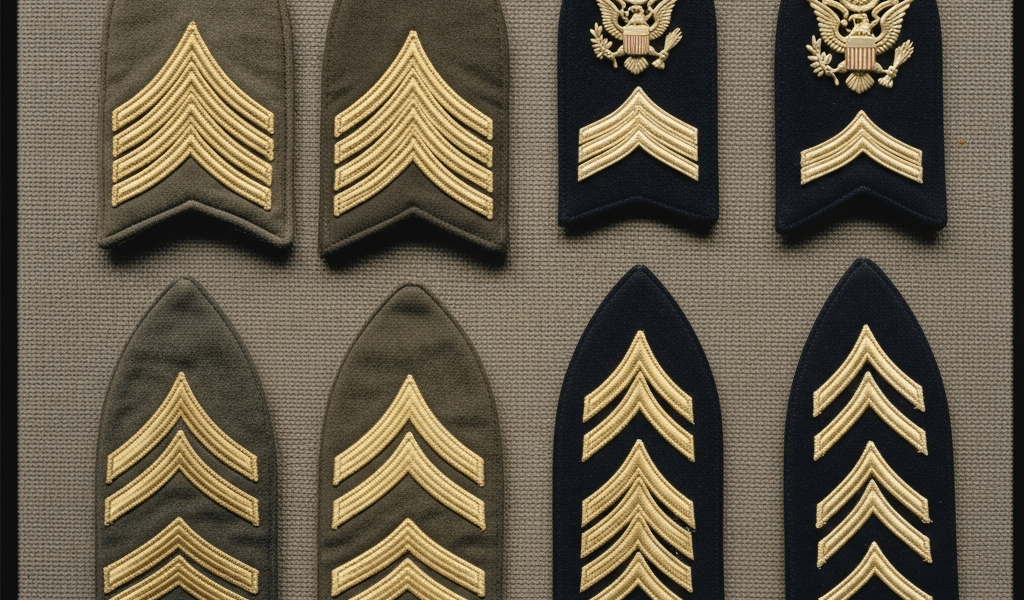
WWII US Army officer insignia rank identification has gotten complicated with all the reproductions flying around—and for good reason. Officer rank boards command premium prices compared to enlisted insignia. A genuine Major’s shoulder board can fetch $80–150 on the legitimate market, while Colonel and General ranks push into the $200–400 range depending on condition and provenance. Enlisted chevrons? Usually $15–40 each.
That price differential created a problem. Online marketplaces flooded with reproduction officer insignia, many manufactured overseas in the last 15 years. Sometimes sellers know they’re listing fakes. More often, they genuinely don’t. I’ve spent enough time hunting through eBay listings and military antique forums to see how ridiculously easy it is for well-intentioned collectors to spend serious money on pieces that never came close to a WWII soldier’s uniform.
The stakes are higher with officer insignia because collectors assume authenticity correlates with rarity. Someone buying what they think is a General’s board imagines provenance, history, value appreciation. Instead, they get Chinese polyester. Learning to spot the difference isn’t optional—not if you’re serious about this hobby.
Officer Shoulder Board Construction Differences
Genuine WWII officer shoulder boards have specific material signatures that reproductions consistently fail to replicate. The backing material matters first. Authentic pieces use a blend of wool felt—typically 80–90% wool—with a dense, slightly stiff hand. Modern reproductions almost always use synthetic felt or cheaper wool blends that feel softer and more plastic-like.
Run your fingers across the back. Real backing resists bending and holds creases. Reproduction felt collapses and compresses easily — at least if you apply any pressure at all. After 80 years, genuine boards show visible compression wear in specific areas where they sat against uniform fabric. You’ll see subtle discoloration patterns that follow actual wear, not uniform fading.
The embroidery thread type separates authentic from fake immediately. WWII-era boards use mercerized cotton embroidery thread with a matte finish. Modern reproductions use rayon or polyester thread with a shinier, more reflective surface. The color saturation differs too. Genuine olive drab embroidery oxidizes slightly, showing brown undertones in areas exposed to light and air. Reproduction thread maintains uniform color because it hasn’t aged.
Bullion wrap—the metallic gold thread wrapped around silk cores—shows the most obvious manufacturing differences. Authentic WWII boards use silk cores wrapped with actual gold or gold-colored metal. The wrap sits tightly, with visible individual spiral turns. Reproduction bullion uses plastic cores or poor-quality silk, and the wrapping appears loose, uneven, or occasionally peeling away. Hold a genuine board at an angle under light. The bullion catches light with a soft, warm glow. Reproduction pieces gleam too brightly or appear flat and dull.
A Major’s board displays two gold oak leaves and one silver insignia device. Authentic pieces show embroidery that follows the contours of the insignia perfectly—oak leaf veins are detailed, overlapping stitches create dimension. Reproductions render oak leaves with simpler, flatter embroidery patterns. The leaf shapes often look slightly off proportion.
Colonel boards feature eagle insignia—those intricate birds demand precise embroidery. Genuine boards show feather detail work that took actual skill. The eagle’s head is distinct, with separate stitching for the eye. Reproductions compress the eagle into a simplified outline. The wings lack feather definition. You can tell instantly whether an embroiderer spent time getting the bird right.
General officer boards are rarest and most valuable—which means they’re faked most aggressively. The star insignia requires careful stitching of narrow points. Authentic boards show even, precise points that maintain sharpness across the entire star. Fakes often produce blunt or irregular star points, especially on the bottom edges where stitching tends to bunch.
Collar Insignia Authentication Details
Collar rank insignia operates under different construction rules than shoulder boards. These small brass or enameled devices came in two basic attachment styles—screw-back and sew-on. Most officers preferred screw-back for daily wear because they stayed secure and came off easily for cleaning.
Authentic screw-back insignia use brass posts with precise threads. The back plate sits flush against the uniform collar. Reproduction screw-backs show poor threading—the posts feel loose or catch when fastening. The back plates are often too thick or thin compared to originals. Weight matters here. Genuine brass insignia have substantial heft. Reproductions use zinc alloy or cheap pot metal that feels light and cheap.
Oak leaf insignia came in green enamel or solid brass versions. Green enamel pieces, if authentic, show even color coverage with slight texture from the firing process. Reproduction enamel appears perfectly smooth, too uniform, or chips easily because the base metal underneath doesn’t match the enamel’s expansion rate. Solid brass oak leaves should show consistent patina and oxidation patterns. Shiny, pristine brass pieces are either recently polished or fake.
Eagle insignia demand close inspection. The head and beak should show crisp detail work. Reproduction eagles often come from low-quality molds with soft features. Look at the back. Authentic insignia have maker’s marks—small stamps indicating the manufacturer. Common WWII makers included Greist Manufacturing, Vanguard, and others. Reproductions either show no marks or marks that are slightly misaligned or blurred.
Sew-on collar insignia were less common but still used. These used gold thread eyelet loops instead of posts. Genuine examples show hand-sewn loops with even stitching. Reproductions use machine-sewn loops that are too perfect and often slightly misaligned relative to the insignia itself.
Common Reproduction Red Flags
Probably should have opened with this section, honestly. These seven signs catch most fakes immediately.
- Machine embroidery patterns — WWII boards used hand embroidery almost exclusively. Modern embroidery machines create perfectly uniform stitch lengths and spacing. Hand embroidery shows variation, occasional loose stitches, and thread tension differences. Machine work is too perfect.
- Color matching inconsistencies — Reproduction manufacturers struggle with accurate olive drab and gold tones. Genuine boards show subtle color shifts from aging and exposure. Fakes maintain uniform color because everything came off the production line simultaneously. Lay multiple authentic boards side by side. You’ll see slight variations. Reproductions look identical to each other.
- Backing stitching patterns — The perimeter stitching that binds the board edge to the backing shows distinctive patterns on authentic pieces. Hand-sewn examples vary in stitch length. Reproductions use machine stitching with consistent 1/8-inch spacing throughout. That perfection is the giveaway.
- Weight and feel differences — Real wool felt boards have substantial weight from the material density. Modern fakes feel light, sometimes plasticky. Pick up an authentic board and a reproduction. The weight difference is immediately obvious.
- Supplier origins — Reproductions come from Chinese manufacturers. Look for poorly spelled care labels, irregular stitching at seams, and packaging that screams “overseas production.” Authentic WWII pieces came from US suppliers. Even faded labels show American company names and addresses.
- Insignia attachment integrity — Genuine embroidery doesn’t fray or separate from backing under normal handling. Reproduction embroidery, especially bullion work, peels away because the backing material doesn’t accept stitches properly. Tug gently on insignia edges. Real pieces hold firm. Fakes show slight movement.
- Oxidation patterns — Brass components on authentic insignia show consistent patina development. Green or brown oxidation follows logical patterns based on air exposure and handling. Reproduction brass either gleams new or shows uneven, spotty corrosion. Natural oxidation looks organic. Faked aging looks painted on.
How to Verify Provenance and Material Age
Non-destructive testing works best for valuable pieces. Thread brittleness tells you immediately if aging occurred. Gently bend a small embroidery thread on the board’s edge. Authentic threads, after 80 years, become slightly brittle. They snap cleanly. Modern thread bends repeatedly without breaking. This test costs nothing and reveals age convincingly.
Fabric aging patterns show themselves under magnification. Use a standard 10x jeweler’s loupe. Genuine felt shows fiber breakdown—tiny fuzzing and lightening of the weave structure. Backing materials develop a grainy appearance from age. Reproductions show pristine, uniform weaving patterns because the material is new.
Oxidation timelines on brass require understanding chemistry. Uncoated brass exposed to air for 80 years develops specific patina patterns. The oxidation progresses from bright to light gold to deeper bronze and finally green. Quick reproduction aging using chemicals creates uneven color and surface texture that doesn’t match natural oxidation. Real patina looks smooth and integrated into the metal surface. Chemical aging looks like paint.
Provenance documentation strengthens authentication. Officer boards that came from uniform estate sales or family collections often include original paperwork. Service records, photographs showing the officer wearing the insignia, or letters mentioning the rank carry weight. Reproductions never have this documentation because they’re manufactured recently. Sellers claiming “estate find” without any supporting information are usually selling fakes.
Authentic pieces gain or maintain value. Collectors trust established dealers with verifiable track records. Legitimate sellers provide detailed condition descriptions, aging observations, and acknowledge any concerns. They welcome returns and questions. Reproduction sellers often avoid detailed examination because scrutiny kills the sale.
Learning these details protects your collection and supports the hobby’s credibility. The market for genuine WWII officer insignia remains strong because serious collectors understand the difference between authentic history and mass-produced replicas.


Stay in the loop
Get the latest military memorabilia market updates delivered to your inbox.