Why Soviet Insignia Is Harder to Read Than Western Rank
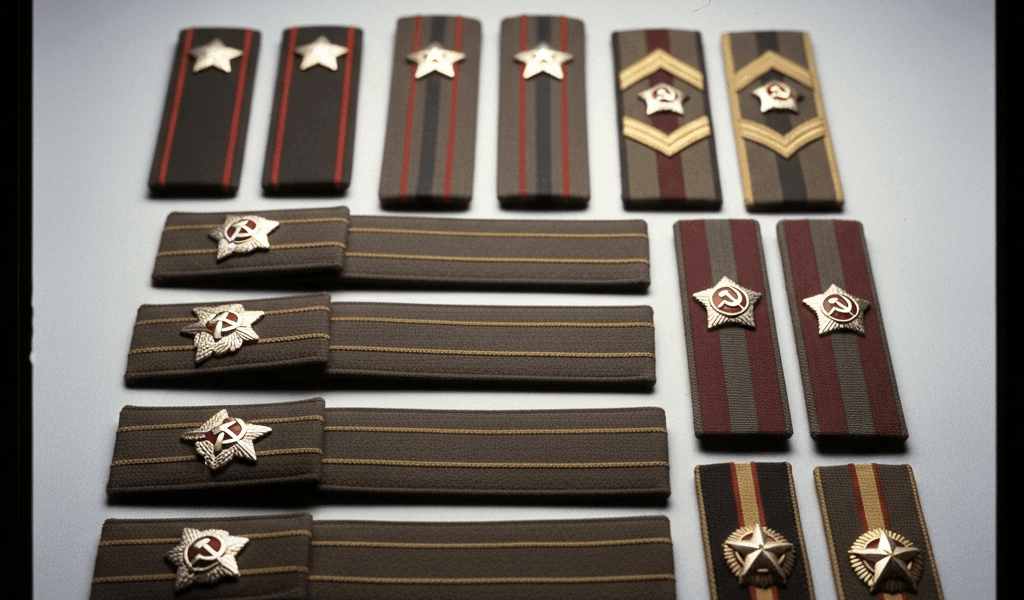
I started collecting Soviet militaria about six years ago, thinking rank identification would be straightforward. I was wrong — completely wrong. Unlike American insignia, where a single shoulder board tells you everything, Soviet uniforms used three completely separate systems working in parallel. Collar tabs, shoulder boards, and sleeve stripes all communicated rank simultaneously, and honestly, they didn’t always agree with each other depending on the branch or era.
This triple-redundancy confused me for months. The Red Army, Navy, and Air Force each developed their own visual language. Even worse, the materials changed radically across the 1950–1980 span. Early Cold War insignia used hand-embroidered gold thread on cloth. By the 1970s, factories switched to printed fabric versions to cut costs. By the 1980s, some units had aluminum or brass metal insignia instead. A piece that looks “wrong” might simply be from a different decade or production facility, not a fake at all.
Non-collectors assume all Soviet insignia looks the same. It doesn’t. This variation is exactly why authentication matters — and why sellers can overprice reproductions to uninformed buyers.
How to Read Soviet Collar Tabs by Branch and Era
Collar tabs are where I always start when identifying a piece. They’re small — roughly one inch square — and pinned or sewn into the collar of the tunic. The Soviet Army used a star system on red or dark cloth backing.
In the 1950s Army collar insignia, a single gold star meant Junior Lieutenant. Two stars meant Senior Lieutenant. A captain had three stars arranged in a triangle. These stars were embroidered in gold or silver thread depending on the branch. The Navy used different colors entirely — gold on dark blue for officers, different shades for enlisted. The Air Force mixed things further with variations in star size and spacing.
Here’s where I made my first major mistake: I bought a “1960s Soviet Captain” collar tab set for $45 thinking the spacing looked authentic. When I compared it against verified museum pieces, the stars were spaced 2mm too far apart. The embroidery thread was also too bright — modern synthetic gold versus aged metal-wrapped thread. The backing cloth didn’t show any wear patterns where a uniform would naturally crease. That should’ve been my first clue.
By the 1970s, the Soviet military began transitioning from embroidered tabs to printed versions. These had stars or insignia printed directly onto cloth, then the piece was cut and trimmed. Print quality varied wildly — sometimes dramatically so. Authentic examples show slight color inconsistency and edge bleed that matches the printing technology of the era. Reproductions often have too-clean edges and uniform color saturation that screams “modern factory.”
Quick visual check: hold the collar tab at an angle under light. Real embroidered pieces show thread direction changes and slight puckering where stitches compress the cloth. Printed pieces show halftone dot patterns under magnification — a telltale sign of 1970s–1980s production versus hand work. You’ll see it immediately once you know what to look for.
Decoding Shoulder Boards and Officer Rank Identification
Shoulder boards are the most complex system. Probably should have opened with this section, honestly. These are larger pieces — typically 4 by 1 inches — sewn or pinned to the shoulder seam of the tunic. Officers wore embroidered or metal insignia on these boards. Enlisted personnel and NCOs wore colored stripes instead.
An Army Senior Lieutenant would wear a shoulder board with two embroidered stars arranged vertically, backed by cloth in the branch color. A Colonel would have a Soviet star at the top of the board with two smaller stars below. A General had a single large star dominating the board. The color of the backing cloth changed by branch — red for ground forces, dark blue for Navy, light blue for Air Force.
Enlisted Soviet soldiers wore stripe systems that I initially confused with officer rank. A Red Army Private First Class had a single thin stripe running vertically down the shoulder board. A Sergeant had two stripes. A Senior Sergeant had three. These weren’t embroidered — they were woven into the cloth or appliquéd, which is why they wear differently than officer insignia does.
The backing material matters enormously for authentication. Soviet military cloth backing from the 1950s–1960s was often a dense wool blend that ages to a particular shade. By the 1970s, factories used cheaper synthetic blends. Original pieces show color variation where sweat and sun exposure have affected the cloth unevenly. Reproductions sometimes use brand-new synthetic cloth that looks almost plastic-like — and that’s when you know.
Metal insignia appeared increasingly through the 1980s. The quality of the metal casting and plating tells a story. Real Soviet military insignia used brass or aluminum pins with fairly crude casting marks on the back — production economy. The pin attachment shows wear marks and sometimes corrosion consistent with decades of handling. Reproductions often have perfect pins that look like they came from a hobby shop yesterday.
Sleeve Stripes and Specialty Insignia — What They Really Mean
Soviet uniforms often included sleeve markings that collectors ignore. These are easy to overlook but surprisingly informative if you know what you’re seeing.
Service length stripes appeared as thin chevrons or horizontal stripes on the lower sleeve. One stripe meant three years of service. Two stripes meant six years. Three stripes meant ten years. These were typically in the branch color on darker cloth. They’re less commonly faked because value is concentrated in rank insignia, not service records.
Specialty skill badges appeared on sleeves too. A crossed rifle and wrench indicated an armorer. A stylized tank meant armor corps membership. These were embroidered or sometimes printed and give context to the uniform’s owner. When I found a 1975 tunic with both Master Sergeant insignia and an armorer badge, the combination helped me authenticate the piece — a random faker wouldn’t know to include the matching specialty badge.
Unit markings were less standardized. Some divisions used sleeve patches. Others didn’t. These vary so wildly by period and region that they’re nearly impossible to authenticate without archival reference materials. I skip them in my authentication process.
Red Flags That Signal a Reproduction or Fake
I’ve examined hundreds of Soviet insignia pieces over the years. Certain tells repeat consistently in reproductions.
Loose stitching on embroidered pieces — Real Soviet military insignia was factory-produced to strict standards. Stitching was tight and uniform. Loose or wavy stitching suggests hand-work by someone without military production experience. The thread should sit flush against the cloth, not lift away from it.
Faded dyes in wrong patterns — Authentic cloth backing shows non-uniform fading. Sun exposure creates lighter areas. Sweat stains sometimes appear around the edges. Reproductions are often overdyed to look “aged” uniformly, which is actually a red flag. Real aging is random and organic.
Wrong backing materials — I’ve seen reproductions use modern cotton sateen or even felt. Soviet military cloth had a specific weave and weight. Running your thumb across it should feel dense and slightly rough, not smooth. Original backing cloth from the 1950s–1960s has a particular texture that’s hard to replicate.
Anachronistic typography on printed insignia — Some 1970s–1980s printed insignia included text. Reproductions sometimes use fonts that didn’t exist in that era or show too-clean kerning. Real Soviet printing was utilitarian and occasionally uneven.
Missing thread wear patterns — Embroidered insignia that’s been sewn to a uniform and worn for years shows specific wear. Stitches compress. Gold thread tarnishes unevenly. The backing cloth frays at edges where the uniform moved. Factory-fresh reproductions lack this wear pattern entirely, even if artificially distressed.
Star spacing inconsistencies — This was the mistake I made. Star placement followed strict measurements. Officers’ collar insignia had precise spacing. Reproductions sometimes deviate by 1–2mm because the maker worked by eye instead of measurement templates.
What Collectors Are Actually Paying for Soviet Insignia
A matched set of 1960s Army officer insignia in excellent condition — collar tabs, shoulder boards, and sleeve stripe — typically runs $80–$150 depending on rank. Reproductions sell for $15–$40 and decline in value immediately after purchase.
General’s insignia commands premiums. A genuine 1970s General’s shoulder board in good condition might hit $200–$300. Rare Air Force variants from the 1950s push toward $250, sometimes more.
Condition is everything. A piece with minor cloth fading but correct construction and materials is worth significantly more than factory-fresh reproductions, which suggests buyers actually know the difference — and are willing to pay for authenticity.
Once you’ve identified your piece using these markers, you can confidently assess whether you’re holding Cold War authenticity or a modern replica. Authentication changes everything for valuation.
Insignia rules change across countries, periods, and uniform variations. For a modern U.S. example, review the AGSU Class B insignia and uniform guide.

Stay in the loop
Get the latest military memorabilia market updates delivered to your inbox.